


On 3 February 2026, PATHS2INCLUDE’s closing conference “European labour markets under pressure – new knowledge on pathways to include persons in vulnerable situations” took place in Brussels, Belgium. This conference concluded the three-year Horizon Europe research project and aimed to be a key tool for dissemination and incubator for new partnerships for the take-up of research findings in policy and practice.
The conference welcomed around 70 participants, representing the European Commission, civil society organisations, social partners, national policy makers, academia and other stakeholders working on inclusive labour markets. It was co-moderated by Cloë Rossenbacker and Elizabeth Gosme from the COFACE Families Europe team.
In this article, you will find a brief summary of the different sessions that took place during the conference. A more detailed overview is available in the conference report. The various materials that were used during the conference, such as the presentations, can be found at the bottom of the article.
Introduction to the PATHS2INCLUDE project
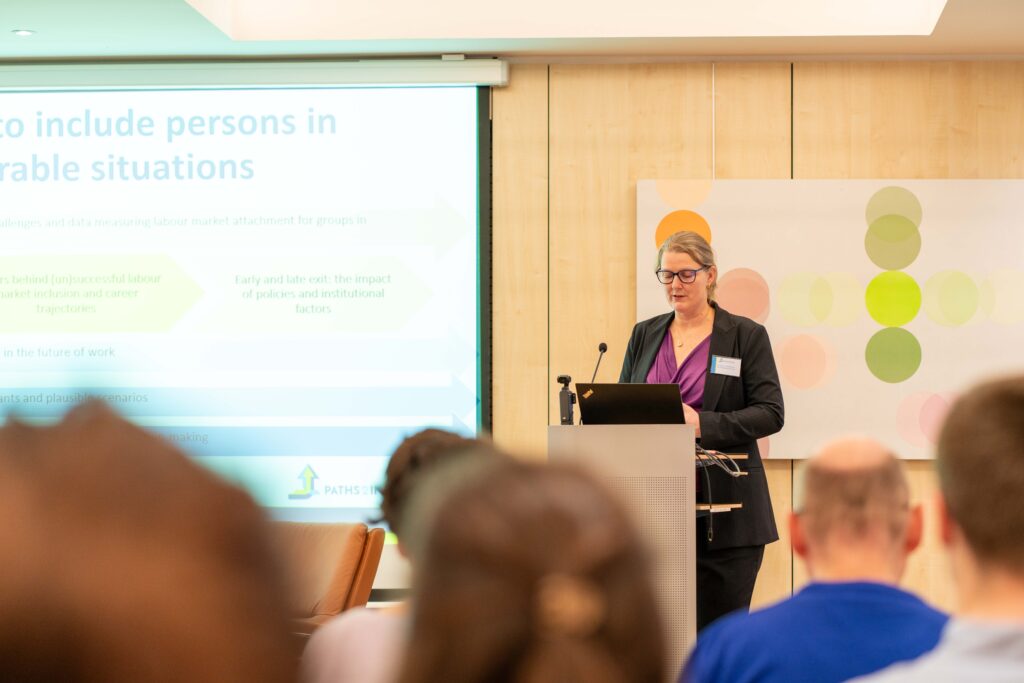
The day started with a warm welcome by Elizabeth Gosme, Director of COFACE Families Europe. After, Dr Elisabeth Ugreninov (Oslo Metropolitan University) introduced the PATHS2INCLUDE project, the different strands of the research, and the project partners involved.
Picture: Benjamin Cutore
Panel debate on equal opportunities in the labour market
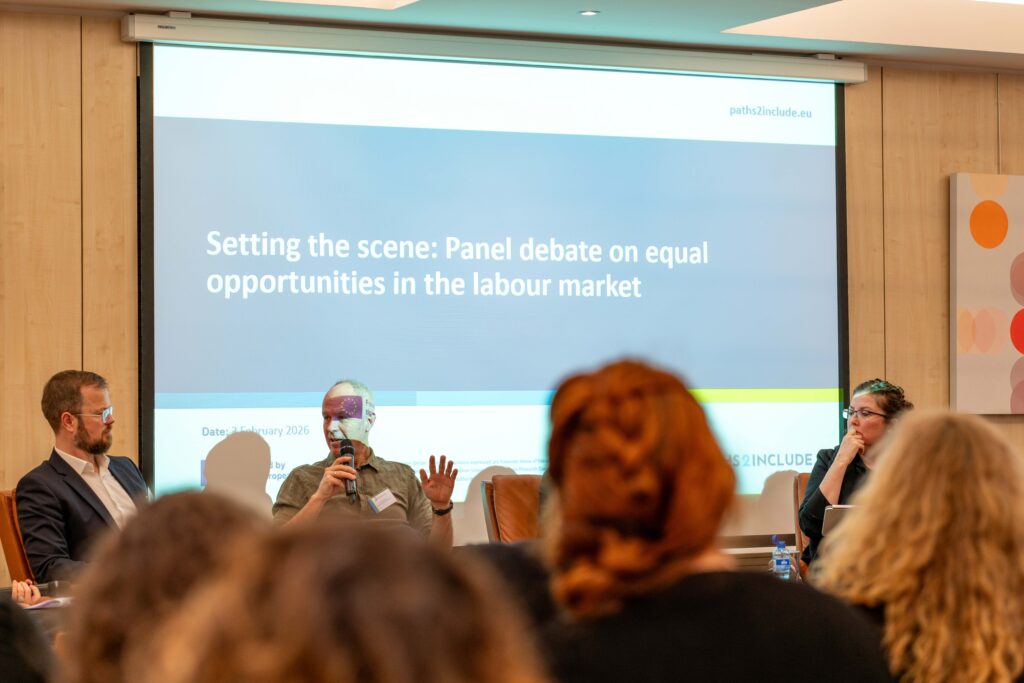
The first panel introduced the main empirical findings of the project. PATHS2INCLUDE researchers Dr Sara Ayllón (University of Girona), Dr Iuliana Precupetu (Research Institute of the University of Bucharest), Dr Jon Rogstad (Oslo Metropolitan University) and Dr Robin Samuel (University of Luxembourg) highlighted key points of vulnerability in different labour market scenarios, including reflections on gaps in data, discrimination in hiring, gender equal labour markets, and older workers in vulnerable situations. Their presentations were followed by a brief Q&A during which recommendations for interventions were discussed.
Picture: Benjamin Cutore
Poster session coffee break
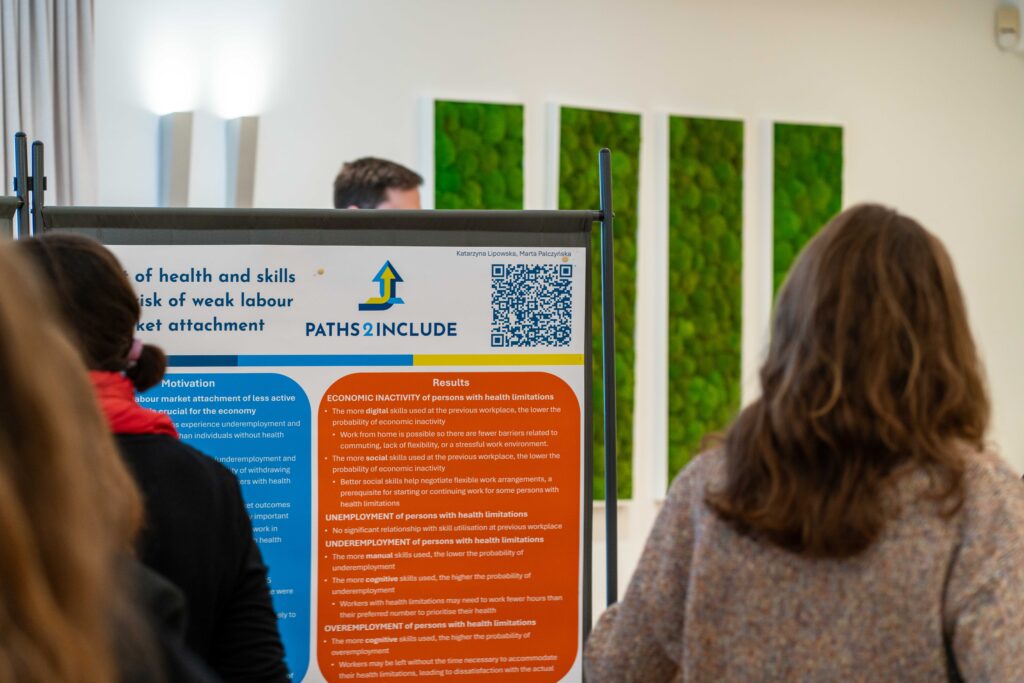
During the coffee breaks, participants had the opportunity to delve further into the various research findings by interacting with the displayed conference posters. Each poster reflects one of the PATHS2INCLUDE policy briefs, summarizing the project’s research findings and providing policy recommendations. The posters are available on our dedicated website page, in the different consortium languages as well as Easy-To-Read English.
Picture: Benjamin Cutore
The role of workplace dynamics for shaping inclusive labour markets
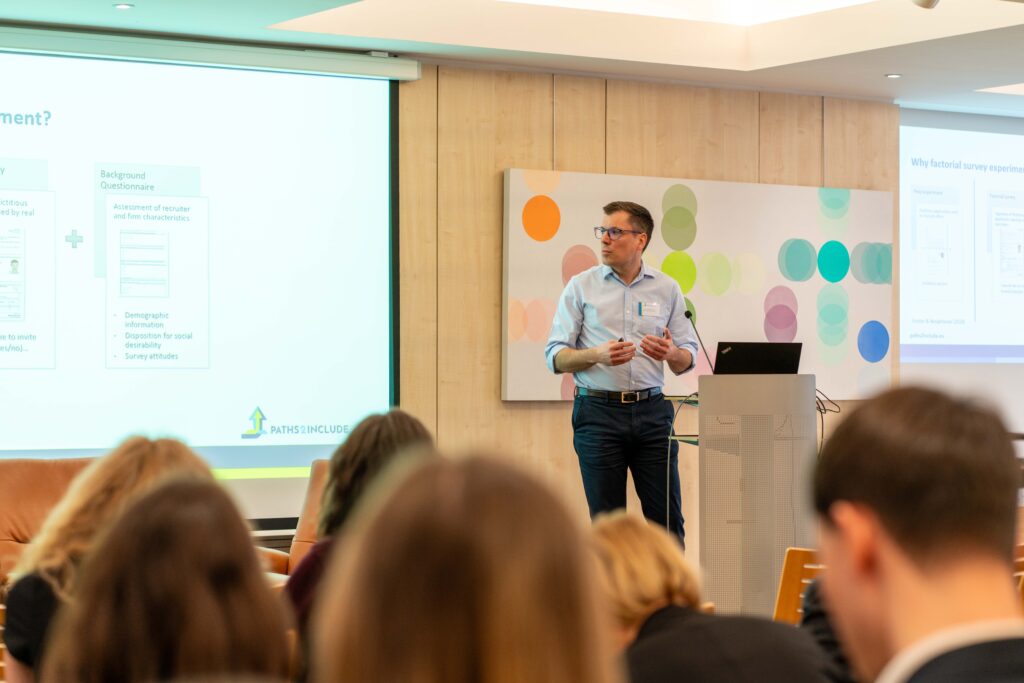
During the first study session, Dr Dominik Buttler from Leibniz University Hannover introduced the project’s key findings on discrimination in recruitment, and how organisational factors affect this phenomenon. Afterwards, Dr Iga Magda (Institute for Structural Research) and Kinga Jóó (European Economic and Social Committee) shared their reflections on the findings.
Topics that were addressed in the discussion were, among others, migrants working below their skills level, quality jobs, and challenges for small enterprises. Participants agreed that swifter skills recognition is essential to ensure smoother transitions for newly arrived migrants on the labour market and that quality jobs are key in creating inclusive labour markets.
Picture: Benjamin Cutore
New risk factors associated with changing labour markets in the future of work
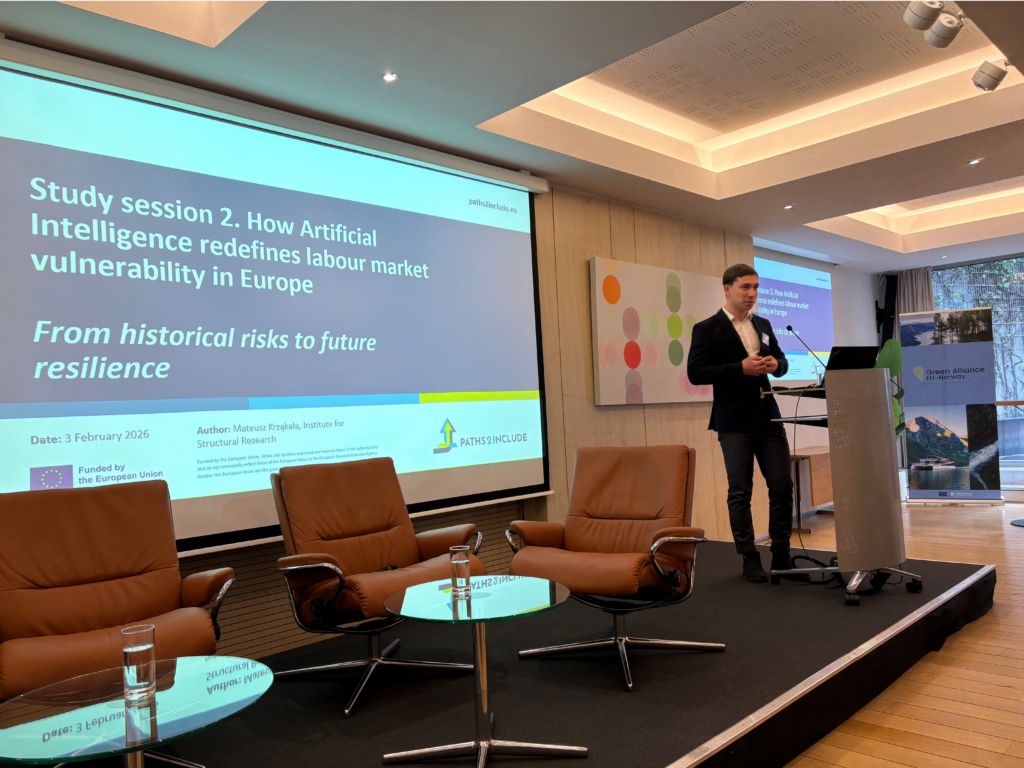
In our second study session, Mateusz Krząkała from the Institute for Structural Research presented his research findings on the impact of digital developments on labour markets and the inclusion of at-risk groups, focusing on Artificial Intelligence. Two different stakeholders, Marie-Amah Kouadio (European Anti-Poverty Network) and Fabio Domanico (European Commission), as well as participants in the audience shared their reflections on the findings.
Participants raised concerns about AI displacing entry-level tasks, job-loss fears and threats to long-term talent development, especially for young and highly exposed workers. They called for worker involvement in AI-related decisions, strong data-protection and human oversight in areas like recruitment and social services. The panel urged targeted digital upskilling, broad support across all worker groups, and robust EU-level regulation so AI can boost productivity without undermining rights or well-being.
Picture: OsloRegion
Benefits of gender inclusive labour markets
During the third study session, Dr Arianna Vivoli (Action Research for Co-Development) discussed the potential impact of reducing the gender employment gap in terms of poverty reduction and increased fiscal space. Discussants Tina Weber (Eurofound) and Laura de Bonfils (Social Platform) shared their reflections on the research findings.
Participants highlighted that unequal unpaid care work, lack of access to childcare, and gender pay gaps remain major barriers to women’s employment, and discussed possible responses, for example, policies promoting more equal sharing of care. Participants agreed that while economic evidence can support advocacy for gender inclusive labour markets, policy should ultimately be guided by well-being, human rights, and inclusive care systems rather than purely by productivity or profit.
The role of the European Union in shaping inclusive labour markets
During the last panel of the conference, PATHS2INCLUDE researcher Dr Federico Ciani (Action Research for Co-Development), Elodie Fazi (European Commission, PES Network), and Caroline Meyers (ESF+ Flanders), were asked how EU policy, legal and funding frameworks can contribute to more inclusive labour markets.
Participants highlighted the role of Public Employment Services (PES) and active labour market policies, as well as the need for more partnerships between PES and NGOs representing people in more vulnerable situations. They also agreed that inclusive labour markets must be central to implementing the European Pillar of Social Rights and the 2030 targets, rather than focusing only on competitiveness. Upcoming initiatives (on poverty, labour mobility and skills) offer an opportunity to build political momentum and scale up inclusive employment strategies across Europe.
Final consortium meeting
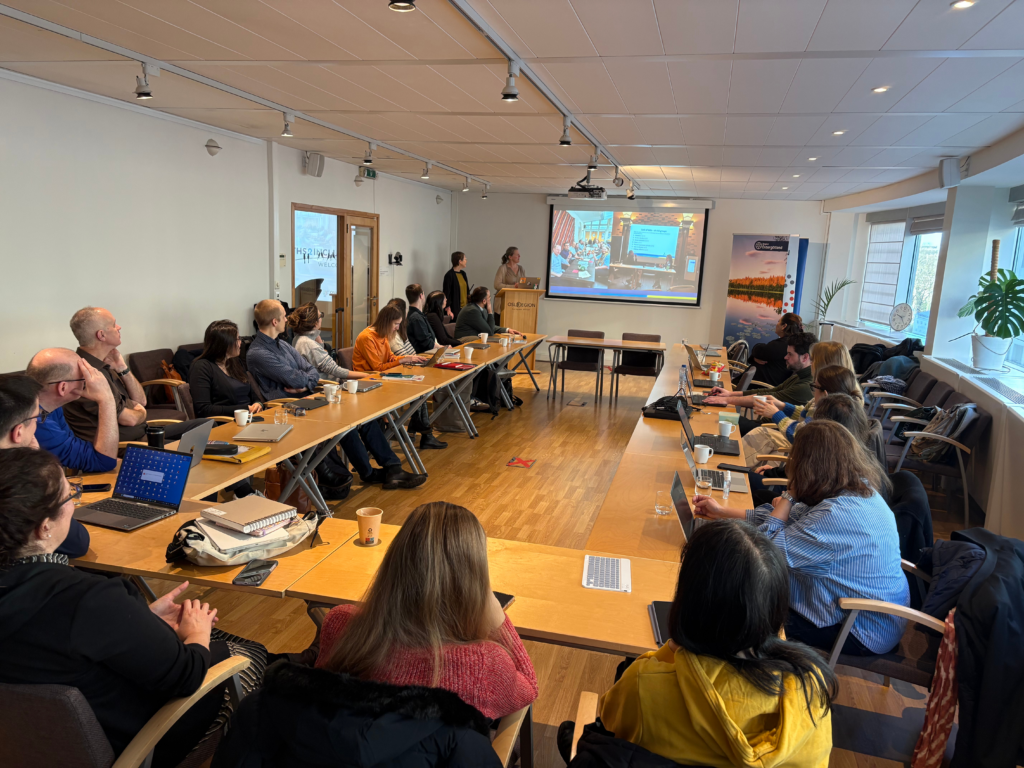
As consortium members were already travelling to Brussels for the closing conference, we took the opportunity to hold a final project meeting. During this meeting, partners debriefed on the conference, discussed future collaborations and publications, and explored how the project’s research findings could generate impact beyond the project’s duration, including potential contributions to policy development and decision-making.
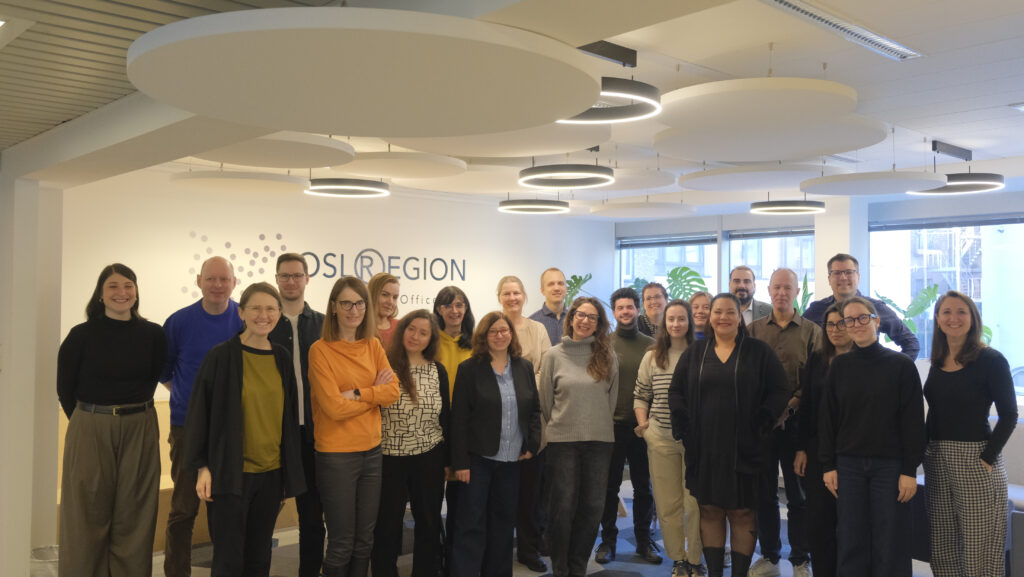
It was also a meaningful moment for the PATHS2INCLUDE team to say goodbye, with partners looking ahead with enthusiasm to building on this work through future collaborations on inclusive labour markets.
Picture: OsloRegion
We would like to thank all the participants for the rich discussion, as well as OsloRegion for hosting the events.
Further information:
Conference report: read here
Conference agenda: consult here
Presentation by the PATHS2INCLUDE researchers: consult here
Conference posters: access here
Highlights video by Benjamin Cutore: view here
Picture: OsloRegion